


Dobrodošli v podjetju MediKin
Welcome on website of MediKin
About
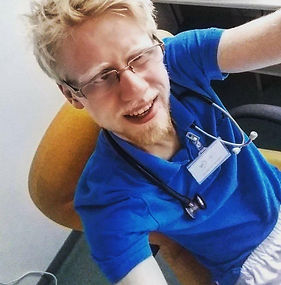
Marko Petrović, RN, MSc, PhD candidate
Marko Petrović is a registered nurse and emergency care specialist working at the Izola Health Centre, Slovenia. He holds master’s degrees in kinesiology and nursing and is currently a PhD candidate at the University of Primorska. His doctoral research focuses on interprofessional collaboration in pharmaceutical care, with a particular emphasis on developing a model tailored to the Slovenian healthcare system. He is active in international research projects and frequently presents his work at scientific conferences.


About
Benjamin Osmančević, RN, MSc, PhD
Benjamin Osmančević is a registered nurse and senior lecturer at the Faculty of Medicine, Juraj Dobrila University of Pula, Croatia. He previously worked in the Teaching Institute of Emergency Medicine of Istria County, gaining extensive clinical experience in prehospital emergency care. His research focuses on emergency medicine, workplace well-being, and interprofessional collaboration. He is the author of several scientific publications and an active presenter at international conferences.


Naše storitve
Our services


Inštruktor prve pomoči
First aid instructor
Raziskovalci
Researchers
Svetovanje za zdravje
Clinical Consultation
Kineziološke storitve
Kinesiology services


Some of our selected articles
1
The development of a model of interprofessional collaboration of nurses in pharmaceutical
care: A qualitative descriptive study
The article explores how physicians, pharmacists, and nurses in Slovenia perceive the role of nurses in interprofessional collaboration within pharmaceutical care. It highlights key strengths, weaknesses, opportunities, and threats of this role, providing a foundation for developing a new model of interprofessional pharmaceutical care.
2
The attitude of health care professionals towards prescribing medicines: A mixedmethod
study
The article examines the attitudes of nursing professionals in Slovenia toward nurses prescribing medicines, using a mixed-methods design that integrates a survey of 61 nurses with in-depth interviews. Findings reveal divided opinions, with more experienced and clinically based nurses showing greater support, while insufficient pharmacology knowledge and inadequate legislation emerge as key barriers to implementing nurse prescribing.
3
Nurses’ perspective on their role in pharmaceutical care: comparison between
Slovenia and Croatia
The article explores how nurses in Slovenia and Croatia perceive their role in interprofessional pharmaceutical care based on qualitative interviews. Findings show similar challenges in both countries, including limited pharmacology knowledge, unequal team status, and weak collaboration, alongside opportunities for expanding nursing competencies.
4
The role of nurses in interprofessional pharmaceutical care:
a qualitative descriptive study of international
expert perspectives
The article explores international experts’ perspectives on interprofessional collaboration in pharmaceutical care, with a particular focus on the role and competencies of nurses. The findings show persistent barriers such as unclear roles, hierarchical structures, and limited interprofessional education, while highlighting the need for stronger organisational support, clearer protocols, and integrated training to improve patient safety and treatment outcomes.
5
Epidemiological Differences in Emergency Medical Service Utilization before and during the COVID-19 Epidemic in Slovenia: A Retrospective Observational Study
The article examines changes in emergency medical service (EMS) utilization at the Izola Health Centre before and during the COVID-19 epidemic, analysing 5,650 outpatient visits. The findings show a slight increase in EMS use, significantly more urgent referrals, fewer respiratory diagnoses, and a marked rise in repeat prescription visits, highlighting the adaptability of EMS services and gaps in primary care access during the epidemic.
6
Ambulance personnel's perceptions on their workplace well-being: A descriptive interpretative study
The study explores how ambulance personnel perceive their physical and mental well-being in the workplace, based on 26 qualitative interviews conducted in Slovenia and Croatia between February and April 2022. It finds that long-term work in emergency medical services negatively affects both lifestyle and health, emphasising the need for preventive programmes, training and organisational support.